检测到您正在使用中文浏览器访问
您当前访问的是英文版网站。
为获得更好的本地化体验,建议您切换到中文版。
Oct.16 2026 10:00
Series Introduction
Making Mines Run Autonomously. RoboNets explores the challenges, technologies, and operational value of autonomous haulage in open-pit mining through four editorial themes. The Mine Awakens examines the key challenges facing the mining industry and why modern mining operations need to evolve.Autonomous Haulage Explained explores the core technologies that enable autonomous mining trucks to operate intelligently, safely, and productively.Inside Mine Operations breaks down the end-to-end autonomous haulage workflow in open-pit mines into four key stages: excavation and loading, haulage, dumping, and maintenance, offering an in-depth look at real-world operations on the ground. Intelligent Operations, Lasting Value highlights that what we deliver goes beyond a fleet of autonomous mining trucks. It is a smarter, safer, and more reliable driver of mining productivity, designed to generate sustainable, long-term value.
Across the next 23 articles, we will present operational data, real-world operating conditions, and actual mining operations to demonstrate how RoboNets’ autonomous haulage solutions for open-pit mines drive sustained productivity and support continuous mining operations.
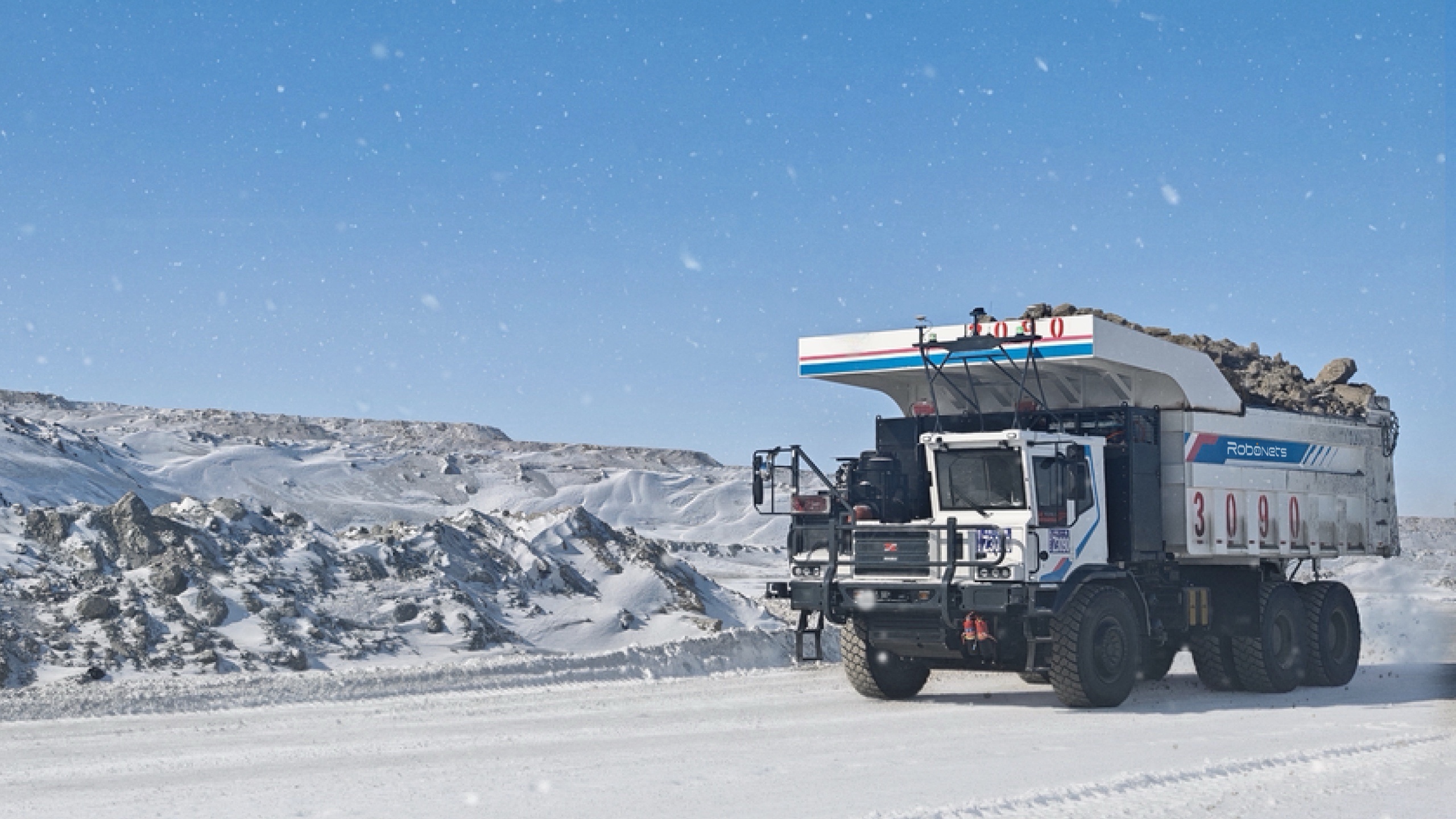
Following the 2026 Spring Festival, temperatures at a mining site in Hailar, Inner Mongolia, remained close to –40°C. The haul roads were covered with frozen snow and marked by ruts and potholes from repeated heavy-truck traffic. Communications were occasionally interrupted, and network coverage did not always extend to every operating area. Despite these challenging conditions, a fleet of approximately 100 autonomous mining trucks equipped with RoboNets' autonomous haulage solution began operating steadily at the mine.
After approximately six months of project development and on-site validation, RoboNets helped the mine establish a fleet of approximately 100 autonomous haul trucks, enabling seamless coordination across loading, haulage, and dumping operations. A glance inside the truck cabins reveals no drivers behind the wheel, yet mining operations continue to run smoothly.
To understand what autonomous haulage truly changes, the best way is to follow one of these trucks through a complete haul cycle.
Before an autonomous mining truck departs from the parking area, it needs to know its assigned destination, which excavator it will serve, and where to transport the material after loading.
Traditionally, dispatchers had to communicate these instructions to each truck individually. In autonomous operations, however, each truck can independently plan its route based on its current position, road conditions, and surrounding vehicles. Critical operational decisions and actions are handled onboard, while the cloud platform centrally manages production assignments and fleet status.
Vehicle health monitoring is also incorporated into the operational plan before departure. Inspection points can be located near in-pit operating areas, allowing trucks to undergo inspections during breaks in operations and reducing unnecessary travel solely for maintenance purposes. By the time a truck leaves the parking area, its upcoming assignments and subsequent maintenance activities are already being coordinated.
When an autonomous mining truck arrives at the loading area, the real work is only beginning.
A single excavator may serve multiple haul trucks simultaneously. Empty trucks must queue for loading, loaded trucks must depart, and the next truck must position itself precisely at the loading point. Decisions about which truck yields, which moves into position, and which waits directly affect operational efficiency, determining whether the excavator can maintain continuous loading or is slowed down by a queue of trucks waiting along the haul road.
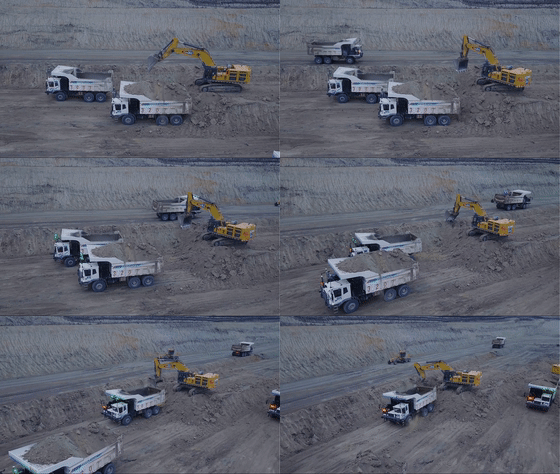
RoboNets' precision V2V truck–shovel coordination technology integrates excavator status, truck positions, and operational priorities into a unified decision-making process. Autonomous haul trucks can automatically identify their designated loading points and approach in sequence. As a fully loaded truck departs, the next empty truck moves into position, enabling smooth and seamless transitions without relying on manual on-site dispatching.
One notable detail from the field is that a truck changeover at the loading point can be completed in approximately 10 seconds. This refers to the time required for a loaded truck to leave its loading position and an empty truck to approach and complete the changeover. For an excavator, smoother transitions can translate into more loading cycles per shift. Real-world operational efficiency is achieved through these continuous, incremental improvements.
Once loading is complete, the autonomous mining truck enters the main haul road.
Unlike urban roads, mine haul roads do not have consistent lane markings or conventional traffic signals. Rain and snow can alter road conditions, airborne dust can reduce visibility, vehicles ahead may stop unexpectedly, and oncoming trucks may need to pass each other on narrow sections. As fleet sizes increase, the challenge extends beyond whether an individual truck can navigate the road to whether multiple trucks can operate in an orderly and coordinated manner along the same haul route.
Even under limited network connectivity at the mine, autonomous mining trucks must continue to perform perception, planning, and control functions. When two trucks approach each other, their onboard systems determine passing priorities based on vehicle positions, directions of travel, and task status. If a truck ahead stops unexpectedly, the following truck can detect the situation and replan its route accordingly. The system supports two-way passing maneuvers on haul roads approximately 12 meters wide and can detect obstacles as small as 10 centimeters in height at a distance of 30 meters.
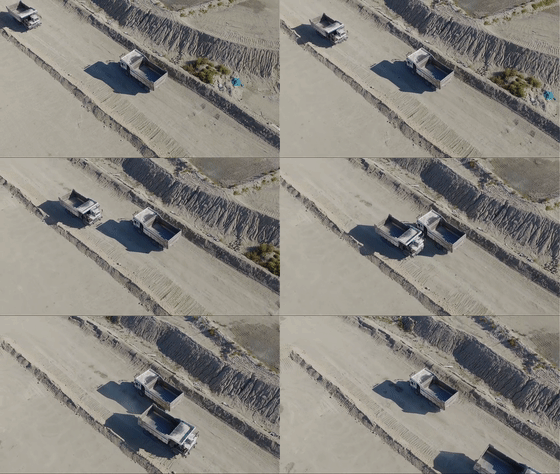
These maneuvers may seem minor: slowing down, yielding, navigating around obstacles, and merging back into the traffic flow. Yet haulage efficiency is built upon the cumulative impact of these small actions. Every unnecessary emergency stop avoided, every passing maneuver completed without delay, and every unexpected situation resolved without manual intervention contributes to a more consistent production rhythm and, ultimately, greater operational efficiency across the mine.
Upon arriving at the waste dump with a full load, the autonomous mining truck must make another set of precise operational decisions.
Dumping boundaries and safety berms can shift, changing where trucks can safely position themselves. Based on the surrounding terrain and the status of nearby vehicles, each truck must dynamically determine a suitable dumping point, maneuver smoothly while fully loaded, approach the safety berm to discharge its load, and then clear the area for the next truck.
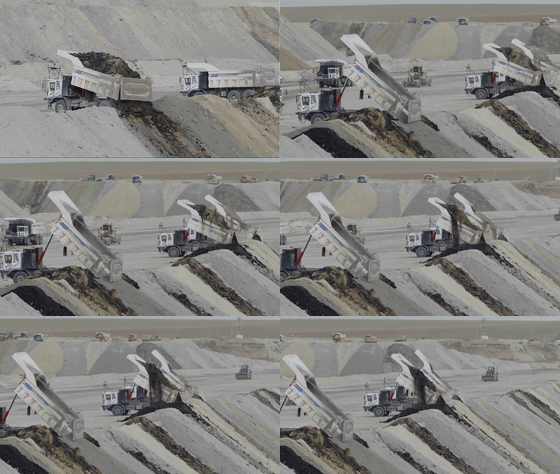
Throughout this process, the map must also adapt to changing operating conditions. RoboNets' autonomous mining trucks can collect environmental data while operating, enabling 3D maps to be reconstructed in approximately 10 seconds to reflect changes on site. Dumping points and haul routes are adjusted as the working area evolves. When multiple trucks operate at adjacent locations, they must also maintain safe separation distances to ensure operational safety.
With dumping complete, the truck finishes the final production task of its current haul cycle. As it leaves the dumping point, its next assignment is already waiting.
Autonomous mining trucks still require an efficient operations and maintenance (O&M) management system to support continuous operation.
In addition to onboard anomaly detection, data on vehicle mileage, operating conditions, and detected anomalies are continuously transmitted to the management platform. When the cloud-based system identifies an anomaly, it first assesses whether the truck can safely continue operating. If inspection or maintenance is required, the truck is directed to a designated service area. Where personnel need to approach the vehicle, control authority must first be formally transferred before access is permitted.
This creates a parallel process alongside haulage operations: while trucks travel along haul roads, fleet health is continuously monitored through the management system. As production tasks progress, inspections and maintenance activities are planned in advance. Around-the-clock (24/7) condition monitoring enables dispatchers, maintenance teams, and safety personnel to identify potential issues earlier and schedule corrective actions at appropriate points in the production cycle, minimizing disruption to ongoing operations.
From departing the parking area and queuing for loading, to traveling along main haul roads and yielding to oncoming traffic; from dynamically adjusting dumping operations at the waste dump to undergoing inspection and maintenance before setting off again, an autonomous haul truck moves through a series of interconnected production activities that must operate in coordination.
This is what distinguishes autonomous haulage in mining from a conventional autonomous driving demonstration: getting a vehicle to move autonomously is only the beginning. Effective truck–shovel coordination, orderly fleet operations, timely anomaly handling, and proactive maintenance planning are what make an integrated operational workflow capable of sustained, long-term operation.
In the articles to follow, we will explore each part of this operational workflow in greater detail: how onboard intelligence enables autonomous decision-making under limited network connectivity, how trucks exchange information with one another and with excavators, how maps adapt to changes in the mining environment, and how safety management and operations and maintenance (O&M) support reliable fleet operations.
For now, the key takeaway lies in this complete haul cycle: what mines truly need from autonomous haulage is an end-to-end production process in which every stage is seamlessly coordinated, operational conditions remain under control, and the entire workflow is fully traceable.
The value of a truck completing a haul cycle lies not in how many capabilities it demonstrates, but in whether it can seamlessly connect loading, haulage, dumping, and maintenance to support the next production cycle.
When individual trucks can operate autonomously, fleets can coordinate their activities, and dispatch and O&M personnel can work within a unified operations management framework, a fleet of approximately 100 trucks can function as a coordinated unit and sustain continuous operations.
This is what RoboNets means by “Making Mines Run Autonomously.”: first, enabling each truck to complete a full haul cycle, and ultimately, enabling the entire mining operation to move seamlessly from one production cycle to the next.